Collector guide
Cast-off figures explained: removable parts and what to specify
What a cast-off figure is, how removable parts are engineered, and what to agree before commissioning a figure with swappable outfit pieces.
What does cast-off mean on an anime or collector figure? A cast-off figure (from the Japanese collecting term キャストオフ) is a statue engineered with removable or swappable clothing, armor, or torso sections so the collector can display the piece in two or more outfit states. On a custom resin figure, removable parts require very different engineering and painting clearances than a flexible PVC retail release.
How removable cast-off parts are engineered
Whereas factory PVC cast-off shells can flex slightly around a torso, cured 3D-printed and cast resin parts are rigid. Sliding a tight rigid shell directly over painted resin skin will scrape pigment off unless the part split is engineered for clearance or built as a swappable assembly.
| Engineering method | How it works on a resin figure | Trade-offs & paint-rub risk |
|---|---|---|
| Swappable torso or waist section (recommended for resin) | Two complete upper-body or hip assemblies are printed and painted separately—one clothed, one unclothed—and swap at the neck, waist, or belt joint | Zero paint rub on skin surfaces and no compromise in fabric thickness, at the cost of printing and painting a second torso |
| Magnetized two-piece clam-shell garment | A jacket, skirt, or chest plate splits along side seams and clicks together via recessed neodymium magnets | Minimizes sliding friction over the body, but requires visible side seams along the garment and enough wall thickness to house magnets |
| Loose rest / gravity-fit accessory | Capes, hats, shoulder pauldrons, or pareo wraps rest lightly on natural shoulder or hip ledges | Simple to remove, though contact points still need gentle placement to avoid scuffing matte topcoat |
| Sliding press-fit shell | A single garment piece slides over limbs or torso on friction pegs | Highest risk of paint transfer or scratching on rigid resin; only practical where the path of removal is completely straight and unobstructed |
Hiding part seams along natural clothing boundaries
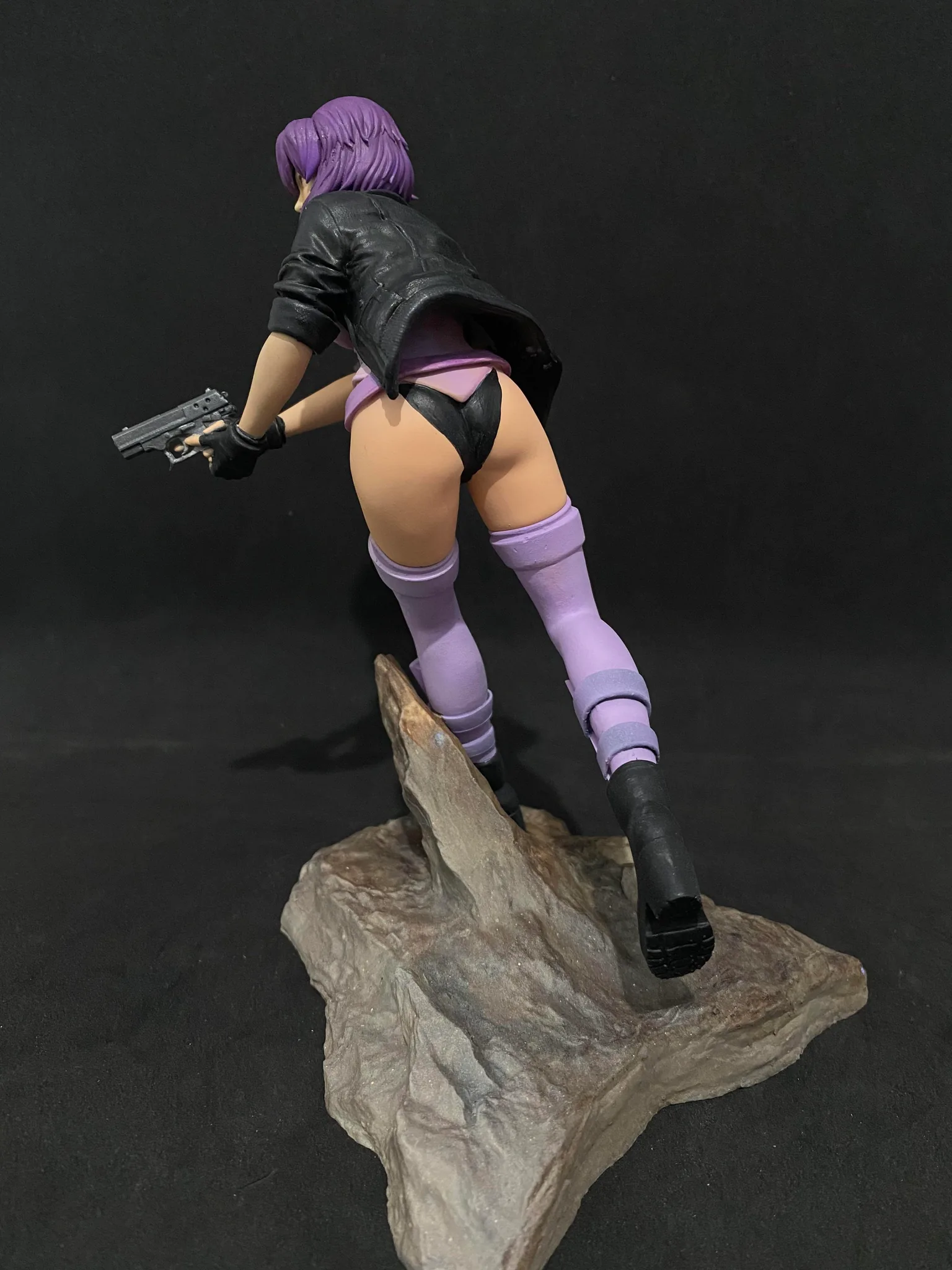
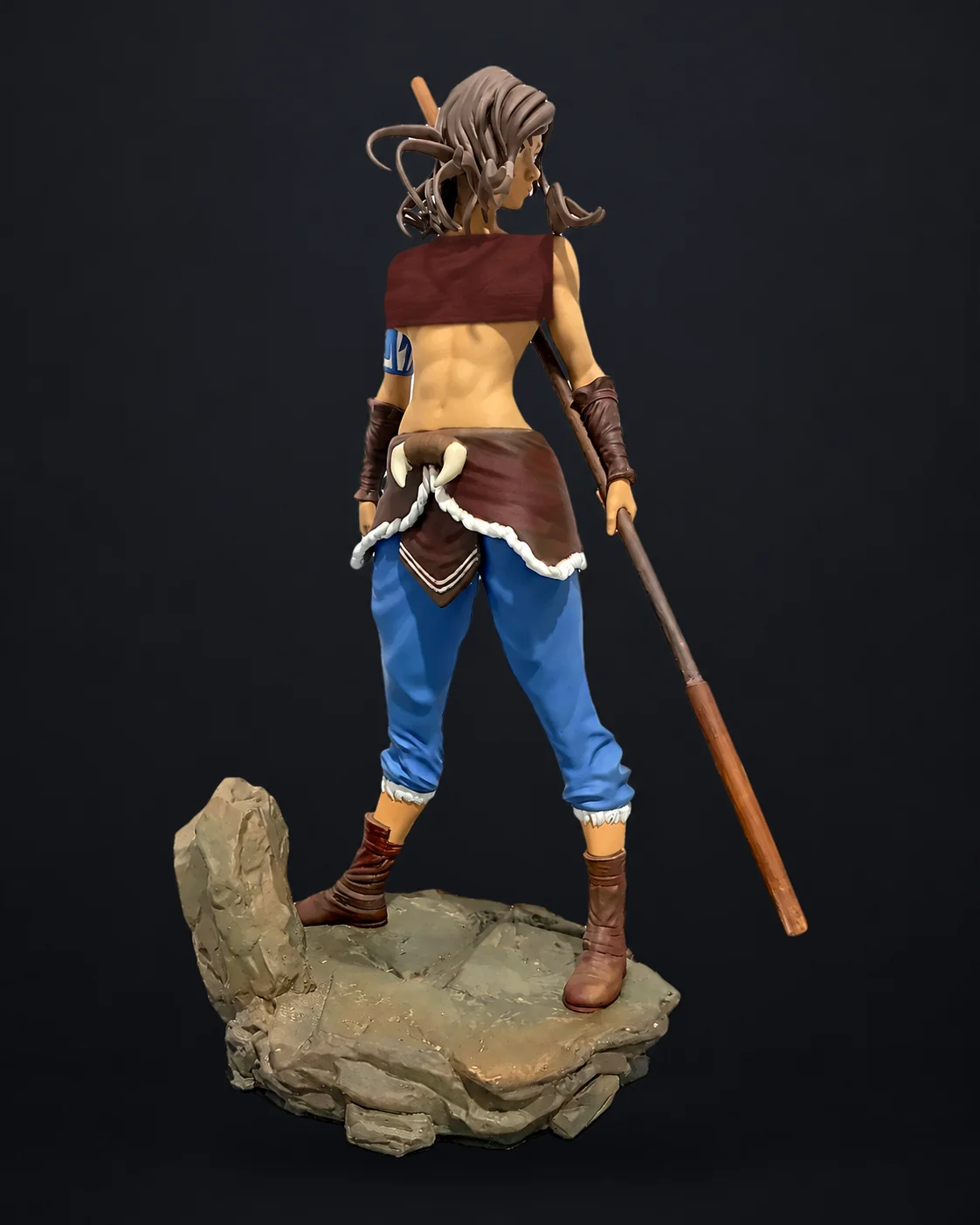
Why cast-off construction changes the project scope
A standard fixed-pose figure only needs finished geometry and paint on the outer surfaces visible in that single outfit. A cast-off or swappable figure requires:
- Complete underlying anatomy and skin shading: Every area revealed when a garment comes off must be sculpted, sanded, primed, and painted with full skin tones and blush.
- Clean inner and edge surfaces: Removable clothing pieces need clean inner margins and mating seams rather than solid boolean intersections.
- Dedicated STL part splits: If you are supplying a 3D character model, check whether the sculptor actually included a second swappable torso or split garment shells. A single merged mesh cannot be made "cast-off" at the printing stage without digital resculpting.
What to agree before commissioning
- Exact display states: List which parts come off or swap out, and provide references for both the clothed and alternate display versions.
- Attachment method: Specify whether you prefer a full swappable torso/pelvis assembly (cleanest finish, zero rub) or magnetized removable garment pieces.
- Supplied file check: Send screenshots of all separate STL subtools in your 3D model checklist so the studio can verify whether the sculptor engineered the clearances properly.
- Packing and storage: Alternate torsos and removable shells ship in their own padded foam cavities; see discreet figure packaging for how multi-part sets are packed.
What the studio takes, and what it does not
- Adult characters only. The character must be an adult in the source material and designed as one.
- No minor-coded requests. No characters who are minors, look like minors, or are presented as students, and no school-uniform requests.
- Published work stays non-explicit. Studio images on this site are suggestive at most. See pin-up and bishoujo figure commissions for full policy details.
Whether a particular removable-part or alternate-torso design can be accepted is confirmed in the scope review before any quote is issued.
Describe the parts you want
List each removable or swappable part, each display version, and your model or art references. The studio confirms whether the engineering can be taken on before quoting.
Build a figure project plan