Collector guide
Cel-shaded vs realistic figure paint: choose a direction
Compare graphic shading, manga hatching, and naturalistic paint treatments. Prepare references for the palette, surfaces, viewing angle, and details to preserve.
A useful paint brief describes how the piece should read from your normal viewing distance. Graphic shading, manga hatching, and naturalistic surfaces are different directions, but the names alone do not settle the palette, contrast, eye treatment, or protective finish.
Compare the visual direction
| Direction | What to reference | What to decide |
|---|---|---|
| Cel-shaded / graphic | Deliberate shadow shapes, outlines, and controlled color blocks | Outline weight, contrast, viewing angle, and which details stay subtle |
| Manga-influenced | Ink-like lines, hatching, and page or panel references | Line placement, monochrome or color treatment, and detail density |
| Naturalistic | Surface differences such as skin, cloth, worn metal, and leather | Material cues, color relationships, weathering, and highlight strength |
Use a completed example to explain one decision
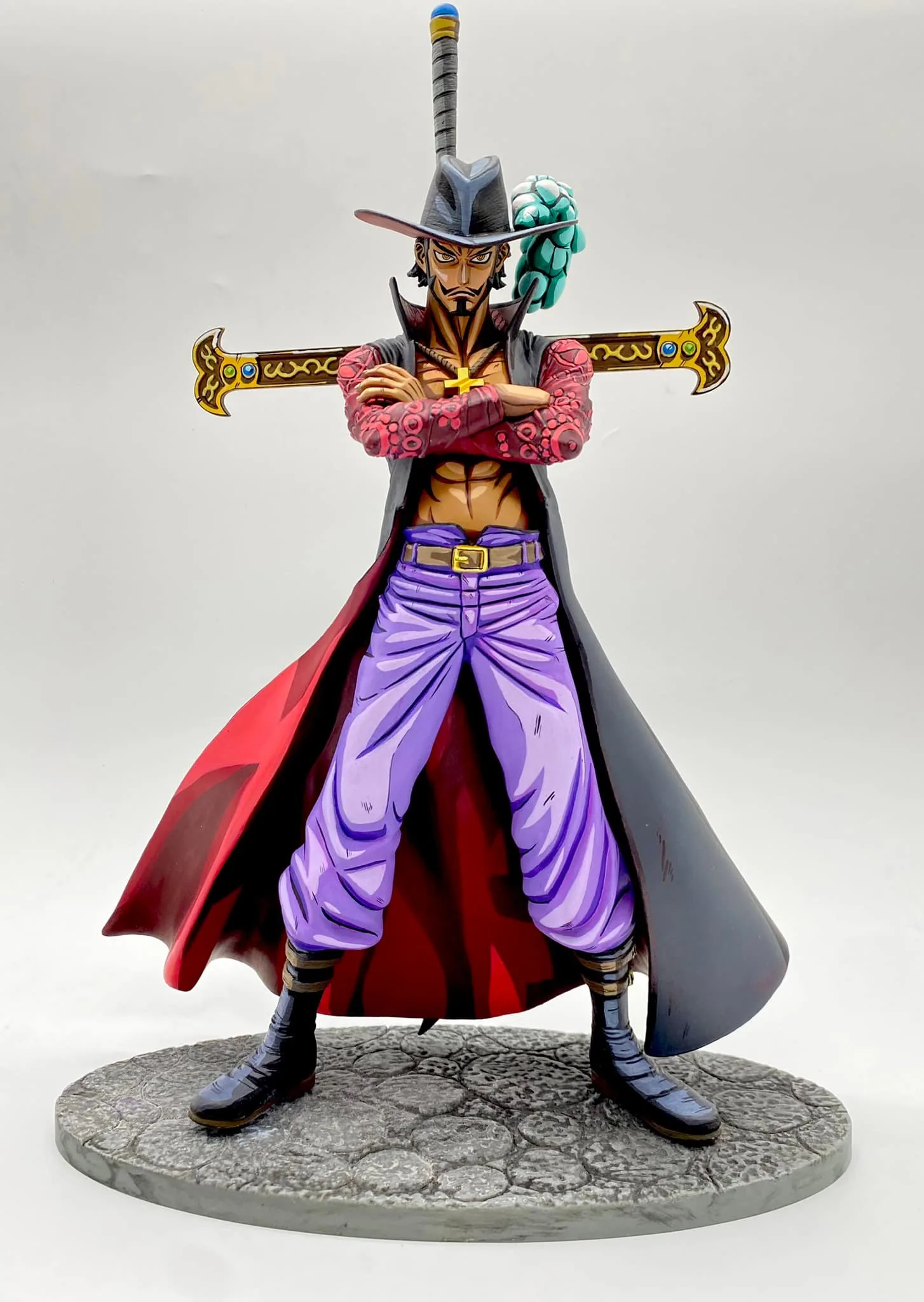
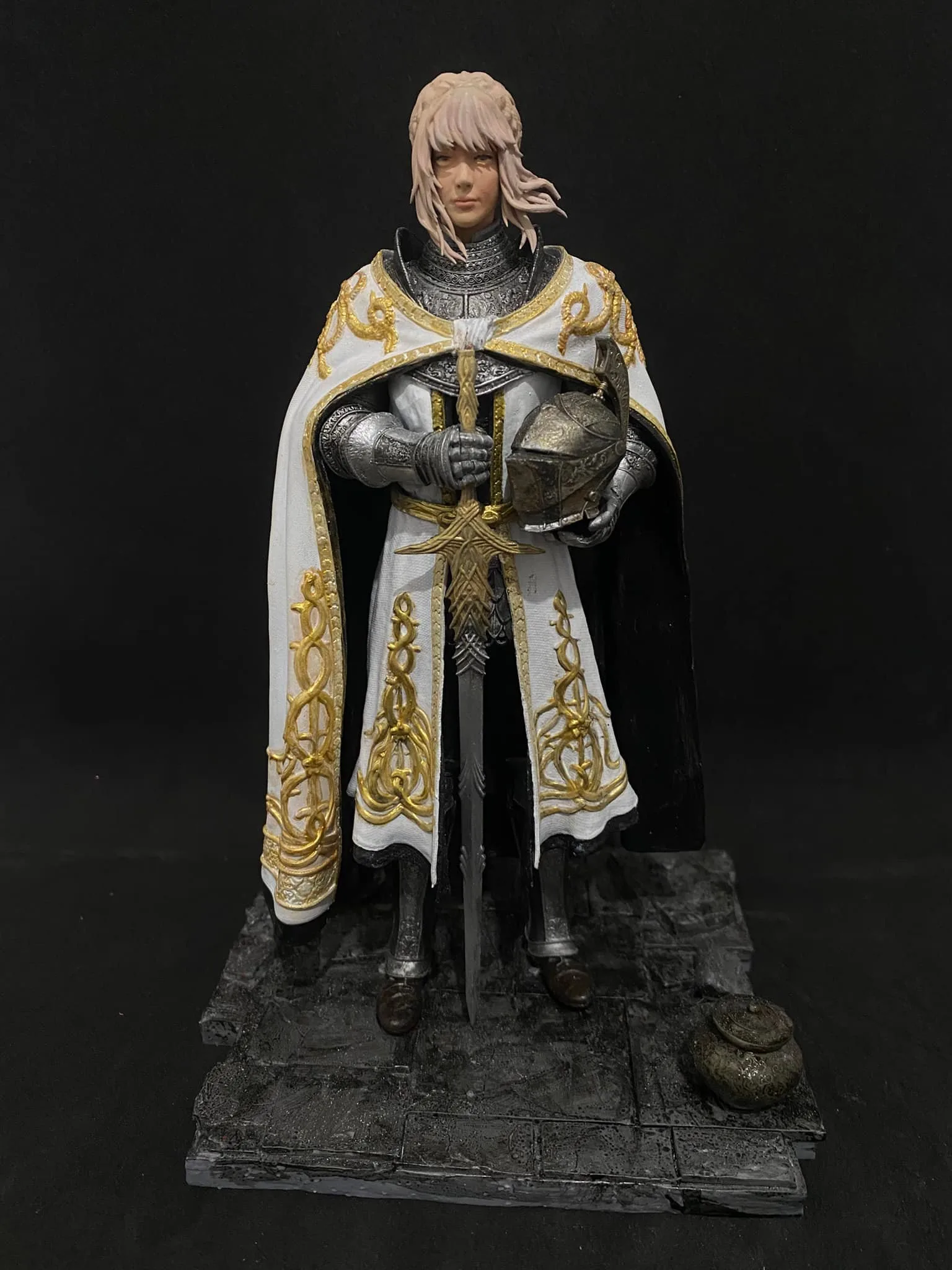
These images show different projects, rather than before-and-after versions of one sculpt. Use them to describe a direction; another material, face, pose, or lighting setup may need a different treatment.
Separate the palette from the shading style
Choose the costume colors independently of the shadow treatment. A graphic repaint can retain the original palette, and a naturalistic finish can still use saturated colors. Label the priority reference for the face, costume, metallic parts, and base so the studio does not have to guess which image controls each area.
For a cel-shaded direction, identify whether you want bold contours throughout or a more restrained treatment. For a manga direction, show the particular hatching or line character you mean. For naturalistic surfaces, identify the material cue you want, such as worn cloth or polished armor.
Check the viewing angle and lighting
Painted shadows and highlights remain in the places where they were applied. State whether the figure will be seen mostly from the front, from several sides, or inside a lit cabinet. Photos and screens also affect perceived color, so agree the reference and review conditions rather than treating every image as an exact physical match.
Specify what should stay unchanged
On an existing figure, list the markings, logos, signatures, face details, and parts outside the repaint scope. Use the repaint condition and photo brief for the incoming object. A desired sculpt change belongs in a separate assessment.
Make the paint direction clear
Pick one direction, attach labeled references, and describe the details to preserve. The studio confirms the achievable finish and preparation before quoting.
Build a paint brief